Dental guides
Dental hygiene: treatment, care and patient questions
Dental hygiene is about keeping teeth, gums and dental work clean and finding problems early. A hygienist or therapist can assess and provide care within their professional scope, alongside your dentist.
A cleaning appointment is not automatically the same as a full dental examination. This guide explains the differences, the questions to ask and when symptoms need dental assessment rather than a routine cleaning booking.
Plan your next step
Understand your options
Start with your gum health, not a fixed cleaning schedule. Some people need targeted periodontal treatment and close follow-up; others mainly need help with their daily routine. The team should explain what is needed and why.
- Ask whether the appointment includes an assessment, stain removal, treatment below the gum line or just a particular service.
- Keep regular dental examinations as advised; a hygiene visit does not replace every aspect of a dentist’s assessment.
- Persistent bleeding, a loose tooth or continuing bad breath deserve assessment even when there is little pain.
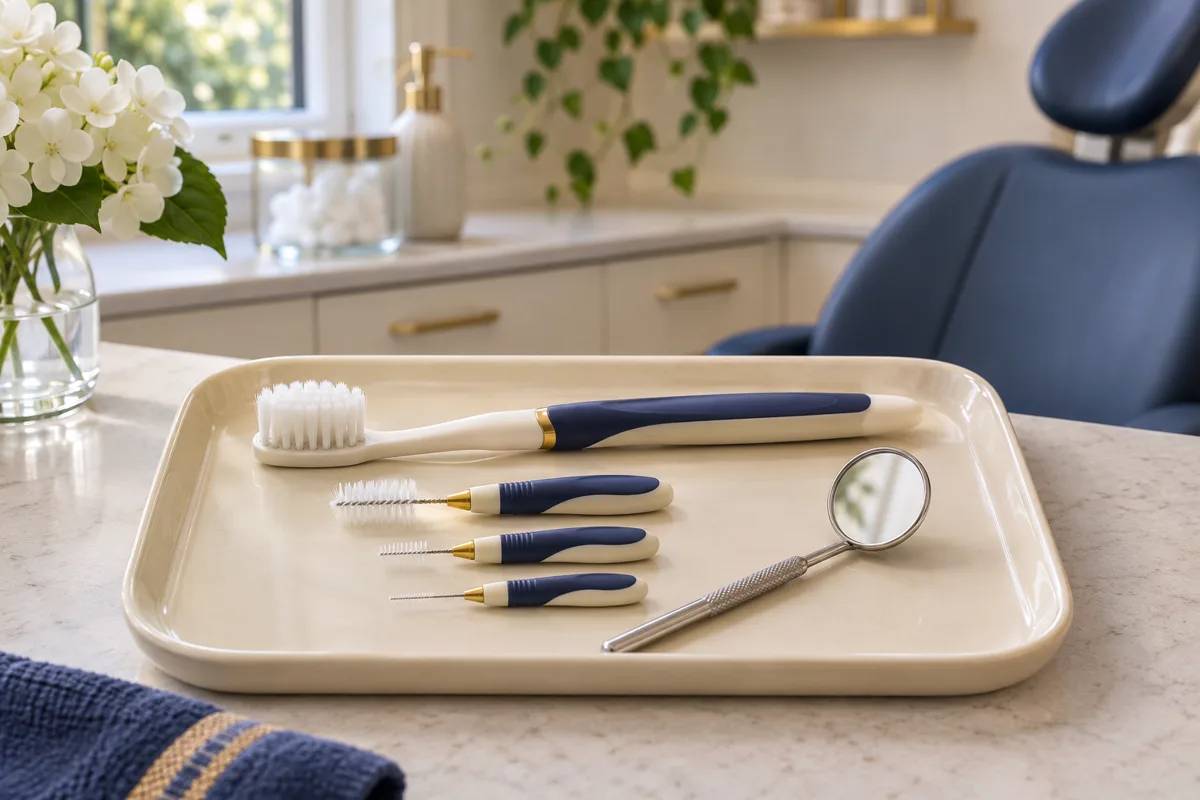
Illustrative artwork, not a patient photograph or a promised treatment result.
Published guides
Browse available guides
Search the published guides by symptom or topic, then follow the advice on seeking professional help.
Showing 9 of 9 published guides.
Your first hygienist appointment
3 min readWhat happens at a hygiene visit, direct access, comfort and preparing for your appointment.
Scale, polish and stain removal
3 min readUnderstand plaque, tartar, polishing, air polishing and what professional cleaning can achieve.
Deep cleaning and gum disease treatment
3 min readHow treatment below the gums differs from a routine clean, and why follow-up matters.
Brushing, flossing and interdental brushes
3 min readBuild a practical daily cleaning routine, including toothpaste, mouthwash and cleaning between teeth.
Bleeding gums and bad breath
3 min readWhen bleeding or persistent breath changes need an assessment, and why masking symptoms is not enough.
Hygiene care with sensitivity or medical conditions
3 min readPreparing for gum care during pregnancy, with diabetes, medicines, implants or additional support needs.
Hygienist costs, frequency and choosing care
3 min readQuestions about prices, NHS and private hygiene, appointment length and follow-up.
AIRFLOW® air polishing: stains, comfort and suitability
3 min readWhat AIRFLOW air polishing can do, how it differs from scaling and whitening, and questions to ask before booking.
EMS Guided Biofilm Therapy: what to expect
3 min readUnderstand EMS, AIRFLOW, Guided Biofilm Therapy and the difference between a branded protocol and an individual gum-care plan.
Dental hygiene: common questions
What does a dental hygienist actually do?
They help assess gum health, remove deposits where indicated, teach cleaning techniques and provide preventive care within their scope. They may recommend a dentist or specialist for concerns beyond that scope.
Can I see a hygienist without seeing a dentist first?
Some practices offer direct access. Ask what is included and whether a dental examination is also needed; availability and suitability are confirmed by the practice.
Does everyone need a clean every six months?
No single interval suits everyone. Gum disease, deposits, home cleaning and other risks inform your care plan. Ask why the proposed interval is appropriate.
Is a hygienist appointment the same as teeth whitening?
No. Cleaning can remove some surface stain. Whitening changes the shade of natural teeth using a dentist-prescribed treatment and needs a separate suitability assessment.
Why should I go if nothing hurts?
Gum disease can develop with little pain. Bleeding, recession, bad breath or tooth movement can be signs that need assessment. Regular examinations help identify less obvious problems.
Will I be judged for not flossing?
Tell the clinician what you find difficult. Their role is to help you build a practical routine. You can ask for a demonstration and a manageable starting point.
Can Odenta help me find hygiene care?
Use Odenta’s hygiene appointment route to request care from participating practices. The practice confirms suitability, the service and fees; an online request is not a confirmed appointment.
When should I avoid waiting for a routine hygiene slot?
Seek prompt dental advice for pain, marked swelling, a loose tooth, pus or worsening symptoms. Breathing difficulty or severe spreading swelling needs emergency medical help.
Can I learn about AIRFLOW and EMS Guided Biofilm Therapy?
Yes. Our dedicated guides explain air polishing, EMS equipment and GBT, including stain removal, scaling, comfort and suitability. Participating practices must confirm whether they offer the requested system.
Related advice
Sources and editorial information
Content updated . General patient information, not a diagnosis or individual treatment plan. Sources inform this content; no individual clinical review is claimed.
- NHS: how to keep your teeth clean (external)
- NHS: gum disease (external)
- SDCEP: professional mechanical plaque removal (external)
- GDC: direct access to dental care professionals (external)
- UK prevention toolkit: periodontal diseases (external)
- NHS: mouth ulcers (external)
- NHS: dental treatment costs (external)
Explore dental hygiene care with Odenta
Odenta helps you request care from participating dental practices. The treating practice confirms availability, suitability, treatment options and fees. Seek professional advice early about symptoms or concerns; an online request is not a diagnosis or confirmed appointment.
View care options