Dental hygiene guide
3 min readScale, polish and stain removal
Understand plaque, tartar, polishing, air polishing and what professional cleaning can achieve.
Plaque is a soft bacterial film; calculus, often called tartar, is a hardened deposit that usually needs professional removal. Staining and calculus are different, so the clinician chooses tools for the problem present.
Scaling removes deposits using appropriate hand or powered instruments. Polishing or air polishing may address surface stain or biofilm where suitable. A branded cleaning method is not a substitute for diagnosis or a guarantee of better gum health.
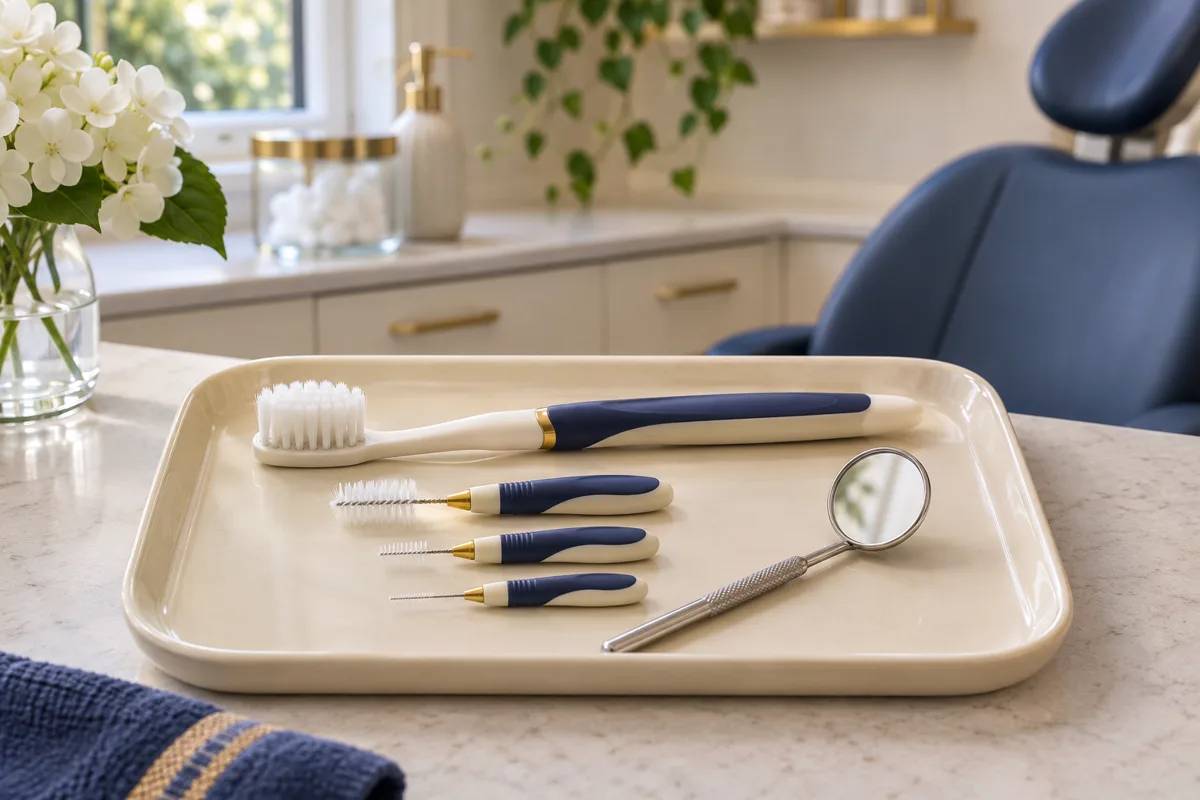
Illustrative artwork, not a patient photograph or promised result.
Contents
What to discuss with your dental team
- Ask what deposits or stains are present and which treatment is clinically indicated.
- Tell the clinician about implants, restorations, sensitivity, allergies and respiratory conditions.
- Do not use home metal scalers or unregulated ultrasonic devices on your teeth.
When to seek professional help
Frequently asked questions
Does a scale and polish whiten teeth?
It may reveal your natural shade by removing surface stain. It does not bleach the tooth or reliably change deep discolouration.
Is tartar just food stuck to my teeth?
No. It is mineralised plaque. Brushing helps control new plaque but cannot reliably remove established hard deposits safely at home.
Can I scrape tartar off with a tool bought online?
Do not attempt this. You can injure gums or damage tooth and restoration surfaces. Ask a dental professional to assess and remove deposits safely.
Is air polishing the same as deep gum cleaning?
No. It is a technique that may be used for selected cleaning tasks. Whether you need treatment below the gums depends on your periodontal assessment.
Will scaling make my teeth loose?
Cleaning does not create gum-disease bone loss. Removing deposits can reveal existing mobility or spaces. Tell the clinician if a tooth feels loose so the underlying support can be assessed.
Why do my teeth feel different afterwards?
Deposits and inflamed gum tissue may have changed how surfaces felt. New sensitivity, roughness or discomfort should be discussed, especially if persistent or worsening.
Can black tea and coffee stains be removed?
Some surface stains can be reduced professionally, but not all dark areas are stain. The team should assess decay, restoration margins and other causes first.
Is polishing needed at every appointment?
Not automatically. Treatment should address your deposits, stains and gum condition rather than follow a fixed package for every patient.
Does cleaning wear away healthy enamel?
Appropriate professional cleaning aims to remove deposits while protecting tooth and restoration surfaces. Discuss concerns and sensitivity; avoid aggressive DIY scraping or abrasive remedies.
Can I choose a stain-removal appointment through Odenta?
You can request hygiene care and describe the staining concern. Ask the practice whether the offered visit includes stain removal and whether assessment or other treatment is needed.
Explore dental hygiene care with Odenta
Odenta helps you request care from participating dental practices. The treating practice confirms availability, suitability, treatment options and fees. Seek professional advice early about symptoms or concerns; an online request is not a diagnosis or confirmed appointment.
View care optionsOfficial sources
These links open professional guidance and patient information. Any manufacturer material is labelled and explains its own system; it is not independent evidence of superiority.
- NHS: how to keep your teeth clean (external)
- NHS: gum disease (external)
- SDCEP: professional mechanical plaque removal (external)
- GDC: direct access to dental care professionals (external)
- UK prevention toolkit: periodontal diseases (external)
- NHS: mouth ulcers (external)
- NHS: dental treatment costs (external)
Content updated 2 November 2026 · General patient information from the sources above.
References used for this guide are listed above.
Was this page helpful?
Your response is saved on this device for now.