Dental hygiene guide
3 min readBrushing, flossing and interdental brushes
Build a practical daily cleaning routine, including toothpaste, mouthwash and cleaning between teeth.
For most adults, brushing with fluoride toothpaste for about two minutes twice daily, including before bed, is the foundation. Spit out the excess rather than immediately rinsing it away. The dental team may adapt advice for your risk and abilities.
Clean between teeth daily using an appropriate aid. A well-fitting interdental brush can help where there is space; floss is useful for tight contacts. Technique and consistency matter more than buying an elaborate set of products.
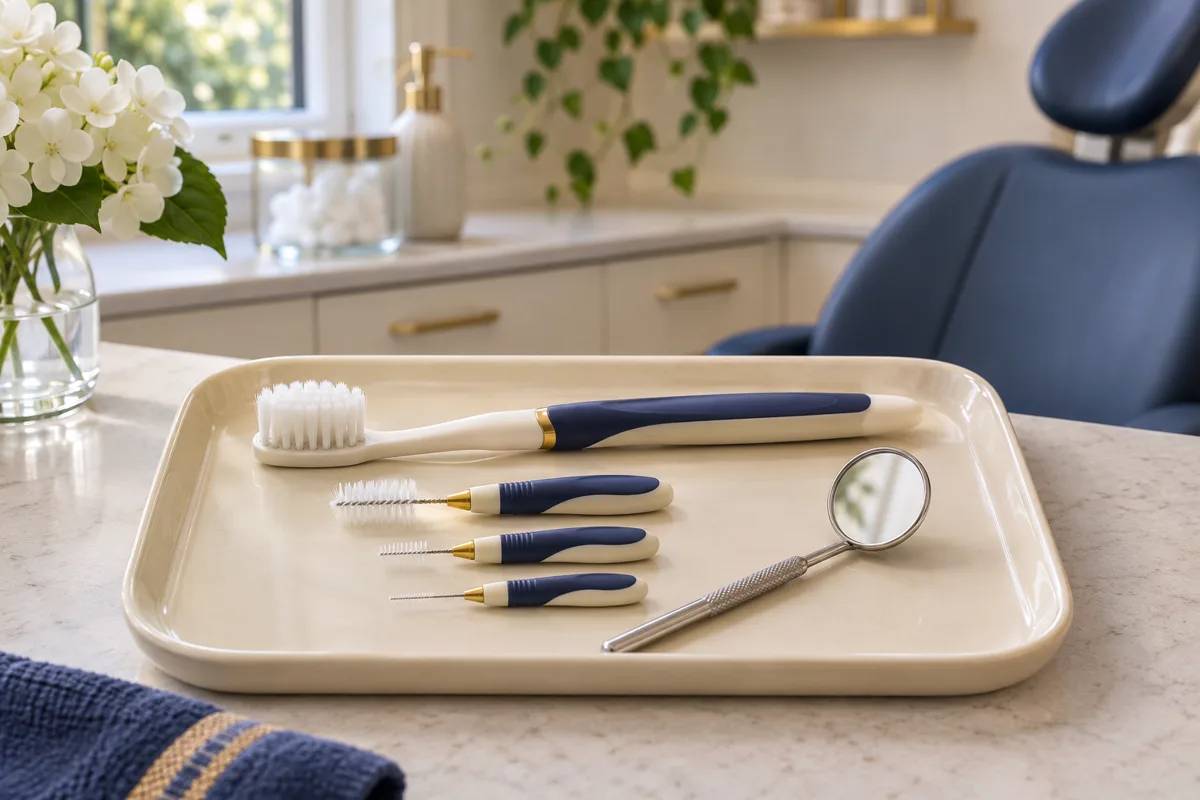
Illustrative artwork, not a patient photograph or promised result.
Contents
What to discuss with your dental team
- Choose adult toothpaste with at least 1,350 ppm fluoride unless given different professional advice.
- Ask for the correct interdental sizes; do not force a brush through a tight space.
- If advised to use fluoride mouthwash, use it at another time from brushing and follow its instructions.
When to seek professional help
Frequently asked questions
Should I floss before or after brushing?
NHS advice favours cleaning between teeth before brushing. Building a consistent daily habit is important; ask for an adapted sequence if you use appliances or special products.
Is an electric toothbrush essential?
No. Manual and electric brushes can both work with an effective technique. Dexterity, comfort and how well you reach every surface should guide your choice.
Can mouthwash replace brushing?
No. It is an addition when appropriate, not a way to remove plaque mechanically from every tooth surface or between teeth.
Why should I not rinse after brushing?
Rinsing immediately washes away much of the fluoride left by toothpaste. Spit out excess foam; follow different instructions only if your dental professional advises them.
What if the interdental brush will not fit?
Do not force it. You may need a smaller size or floss. Ask the team to show which aid suits each gap.
Do I need one brush size for my whole mouth?
Not necessarily. Different spaces may need different sizes. A brush should fit comfortably and clean without being forced.
Can a water flosser do everything?
It may be useful for some people, particularly where dexterity or appliances make cleaning difficult. Ask how it fits your routine; it does not replace toothbrushing.
Is bleeding a reason to stop cleaning?
Use gentle effective cleaning and arrange assessment for bleeding. Do not repeatedly traumatise the area or assume persistent bleeding is harmless.
Can I share a toothbrush with my partner?
Use your own toothbrush. Sharing transfers saliva and microorganisms and is unnecessary even if you live together.
What if I can only manage a little cleaning?
Tell the team about pain, disability, fatigue or sensory difficulties. They can prioritise steps and adapt aids or support rather than give an unrealistic routine.
Explore dental hygiene care with Odenta
Odenta helps you request care from participating dental practices. The treating practice confirms availability, suitability, treatment options and fees. Seek professional advice early about symptoms or concerns; an online request is not a diagnosis or confirmed appointment.
View care optionsOfficial sources
These links open professional guidance and patient information. Any manufacturer material is labelled and explains its own system; it is not independent evidence of superiority.
- NHS: how to keep your teeth clean (external)
- NHS: gum disease (external)
- SDCEP: professional mechanical plaque removal (external)
- GDC: direct access to dental care professionals (external)
- UK prevention toolkit: periodontal diseases (external)
- NHS: mouth ulcers (external)
- NHS: dental treatment costs (external)
Content updated 2 November 2026 · General patient information from the sources above.
References used for this guide are listed above.
Was this page helpful?
Your response is saved on this device for now.