Dental hygiene guide
3 min readAIRFLOW® air polishing: stains, comfort and suitability
What AIRFLOW air polishing can do, how it differs from scaling and whitening, and questions to ask before booking.
Air polishing uses a controlled spray of air, water and dental powder to remove soft deposits and surface staining. AIRFLOW® is an EMS brand; other air-polishing systems also exist. The clinician selects the equipment, powder and technique for your mouth.
Air polishing does not replace removal of hard calculus or an assessment of gum disease. Removing surface stain can make teeth look cleaner, but it does not bleach their underlying colour. Tell the clinician about breathing conditions, allergies, medicines and dental work so they can check the relevant equipment and powder instructions.
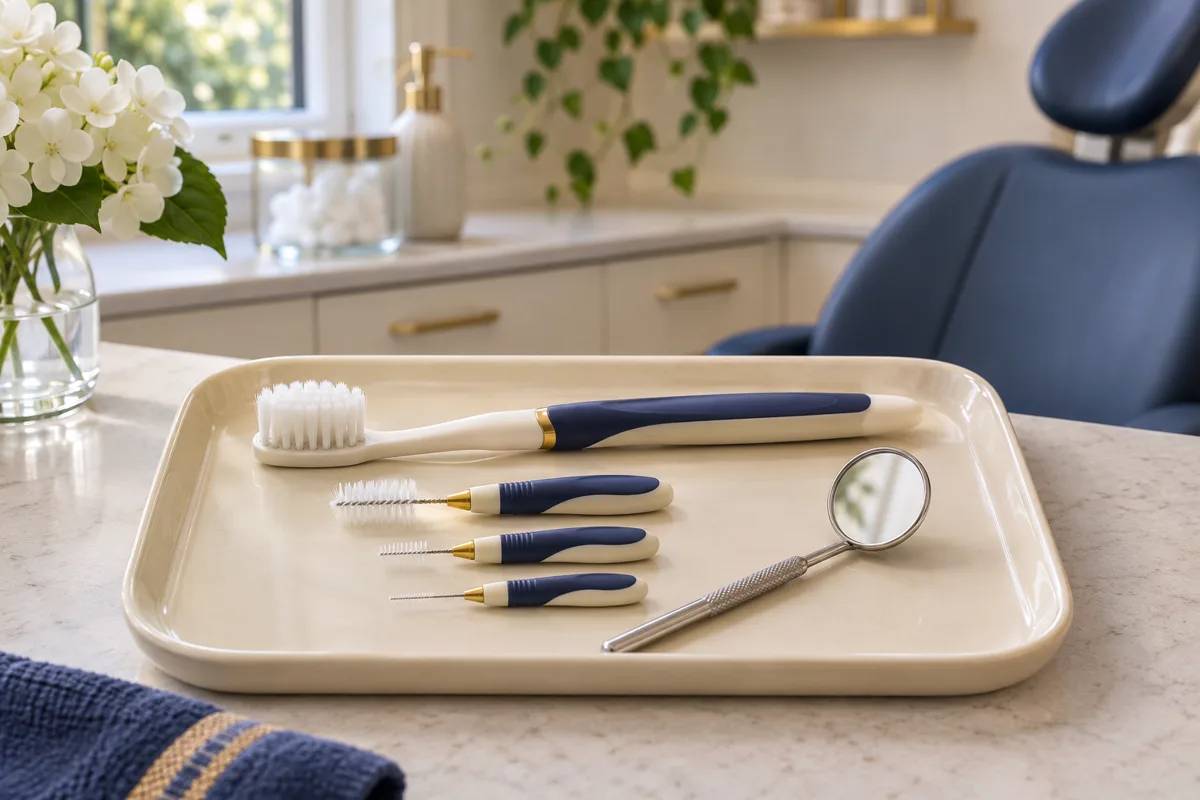
Illustrative artwork, not a patient photograph or promised result.
Contents
What to discuss with your dental team
- Ask whether air polishing is appropriate for your teeth, gums, implants and restorations.
- Ask what the appointment includes, which system is used and whether scaling or periodontal treatment is also needed.
- Seek professional assessment early for bleeding, pain, swelling or a loose tooth; do not book stain removal as a substitute for diagnosis.
When to seek professional help
Frequently asked questions
Is AIRFLOW the same as a scale and polish?
No. Air polishing targets soft deposits and surface staining. Hard tartar usually needs hand or powered scaling instruments. The clinician may combine techniques.
Will it remove tea, coffee or smoking stains?
It can remove suitable surface staining. Results depend on the stain and tooth surfaces. Internal discolouration, decay and restoration colour need separate assessment.
Will my teeth become several shades whiter?
There is no guaranteed shade change. Removing external stain may brighten their appearance, but air polishing is not bleaching or a substitute for dentist-prescribed whitening.
Does AIRFLOW hurt?
Comfort varies. Sensitive roots, inflamed gums and the spray can feel uncomfortable. Explain your concerns beforehand and agree a signal to pause; no technique should be advertised as painless for everyone.
Is the powder baking soda?
Powders differ. Some contain sodium bicarbonate and others use different ingredients, such as erythritol or glycine. Ask which product is planned and disclose allergies and medical restrictions.
Can I have it if I have asthma or breathing problems?
Tell the practice before booking. Spray and powder require a suitability assessment, appropriate precautions and adherence to manufacturer instructions. Another cleaning method may be preferable.
Can it clean around implants, crowns or bonding?
Suitable equipment and powders can be used on certain dental work, but the clinician must check the surfaces and tissue health. Do not assume every powder or technique is suitable for every restoration.
Will it scratch my enamel?
Correct product selection and technique matter. Ask about exposed roots, existing damage and restorations. It is not appropriate to promise zero risk or copy professional air polishing with a home device.
Can I eat afterwards?
Follow the clinician’s advice for the actual treatment, including any fluoride application or local anaesthetic. There is no single restriction that applies to every air-polishing appointment.
Does every Odenta practice offer EMS AIRFLOW?
Do not assume so. Use Odenta’s hygiene route to request care and ask the participating practice to confirm the system, suitability, availability and price before booking.
Explore dental hygiene care with Odenta
Odenta helps you request care from participating dental practices. The treating practice confirms availability, suitability, treatment options and fees. Seek professional advice early about symptoms or concerns; an online request is not a diagnosis or confirmed appointment.
View care optionsOfficial sources
These links open professional guidance and patient information. Any manufacturer material is labelled and explains its own system; it is not independent evidence of superiority.
Content updated 2 November 2026 · General patient information from the sources above.
References used for this guide are listed above.
Was this page helpful?
Your response is saved on this device for now.