Dental guides
Clear aligners: treatment, care and patient questions
Clear aligners use a planned series of removable trays to move teeth. They need a proper dental and orthodontic assessment, a clinician responsible for treatment and ongoing monitoring.
This collection explains what aligners can and cannot do, everyday practicalities and the questions to ask before committing. A digital simulation is a planning aid, not a guaranteed result.
Plan your next step
Understand your options
Choose a clinically appropriate plan, not just a brand or promised finish date. Tooth and gum health, the bite and your ability to follow the wear schedule affect the decision.
- Ask who will examine you, plan treatment and handle problems.
- Discuss attachments, enamel reduction, extractions, alternatives and risks before consenting.
- Include retainers, reviews and possible refinements in the plan and estimate.
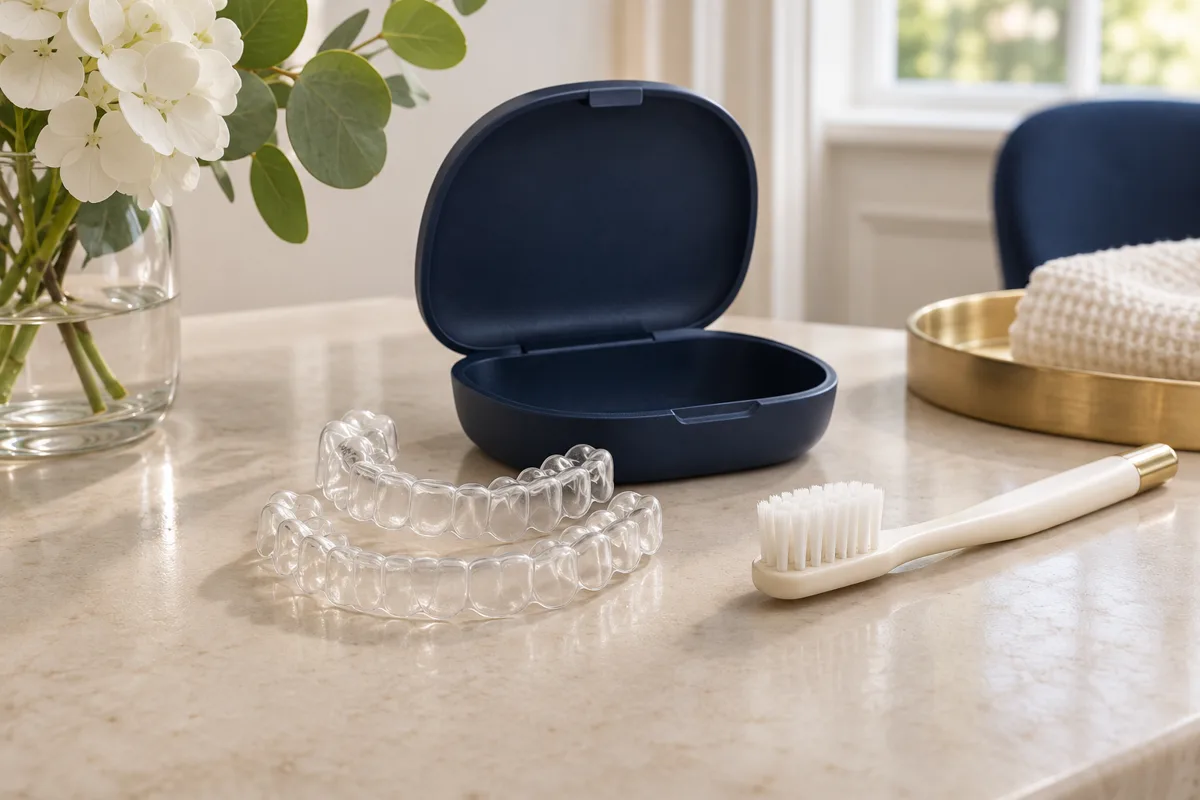
Illustrative artwork, not a patient photograph or a promised treatment result.
Published guides
Browse available guides
Search the published guides by symptom or topic, then follow the advice on seeking professional help.
Showing 6 of 6 published guides.
Are clear aligners right for me?
3 min readCrowding, gaps, bite problems, gum health and choosing an appropriate orthodontic plan.
Aligner stages, attachments and enamel reduction
3 min readScans, treatment planning, attachments, IPR, elastics and refinements explained.
Wearing and cleaning clear aligners
3 min readDaily wear, changing trays, safe cleaning and keeping teeth healthy during treatment.
Eating, speaking, sport and daily life with aligners
3 min readPractical questions about drinks, meals, work, kissing, travel and exercise.
Lost, broken or painful aligners
3 min readWhat to do when trays do not fit, attachments come off or treatment feels wrong.
Aligner costs, retainers and long-term results
3 min readWhat to include in the estimate and how to maintain the result after active treatment.
Clear aligners: common questions
Are clear aligners the same as Invisalign?
Invisalign is one brand. Clear aligners are a treatment category, and the clinician’s assessment and plan matter whichever system is used.
Can aligners treat every orthodontic problem?
No. Some movements and bite problems need another appliance or a combined approach. Ask about suitable alternatives.
Are they completely invisible?
No. Trays and tooth-coloured attachments can be visible, especially close up. Ask to see realistic examples.
Do I need to wear them all day?
Wear follows the treating clinician’s schedule and usually requires substantial daily commitment. Do not switch to night-only wear without advice.
Can I order trays without a dental examination?
A comprehensive clinical assessment is important. Remote images alone do not establish the health of teeth, roots and gums or every bite issue.
Will I need retainers afterwards?
Yes. Retention is part of maintaining orthodontic results and needs a long-term plan.
How can Odenta help?
Odenta’s clear-aligner route lets you request a consultation with participating practices. The treating clinician confirms suitability, the plan and fees.
When should I contact the clinician early?
Report persistent pain, a poor-fitting or damaged tray, gum swelling, loose attachments or unexpected tooth movement. Do not force treatment to continue through a problem.
Related advice
Sources and editorial information
Content updated . General patient information, not a diagnosis or individual treatment plan. Sources inform this content; no individual clinical review is claimed.
Explore clear aligners care with Odenta
Odenta helps you request care from participating dental practices. The treating practice confirms availability, suitability, treatment options and fees. Seek professional advice early about symptoms or concerns; an online request is not a diagnosis or confirmed appointment.
View care options