Facial aesthetics guide
3 min readDermal fillers: decisions, risks and questions
What adults should ask about dermal fillers, including product differences, reversibility, complications and realistic expectations.
Dermal fillers are injected products used for selected cosmetic changes. Products and treatment areas differ, and injections can cause serious complications. A face-to-face assessment and informed discussion should come before any decision.
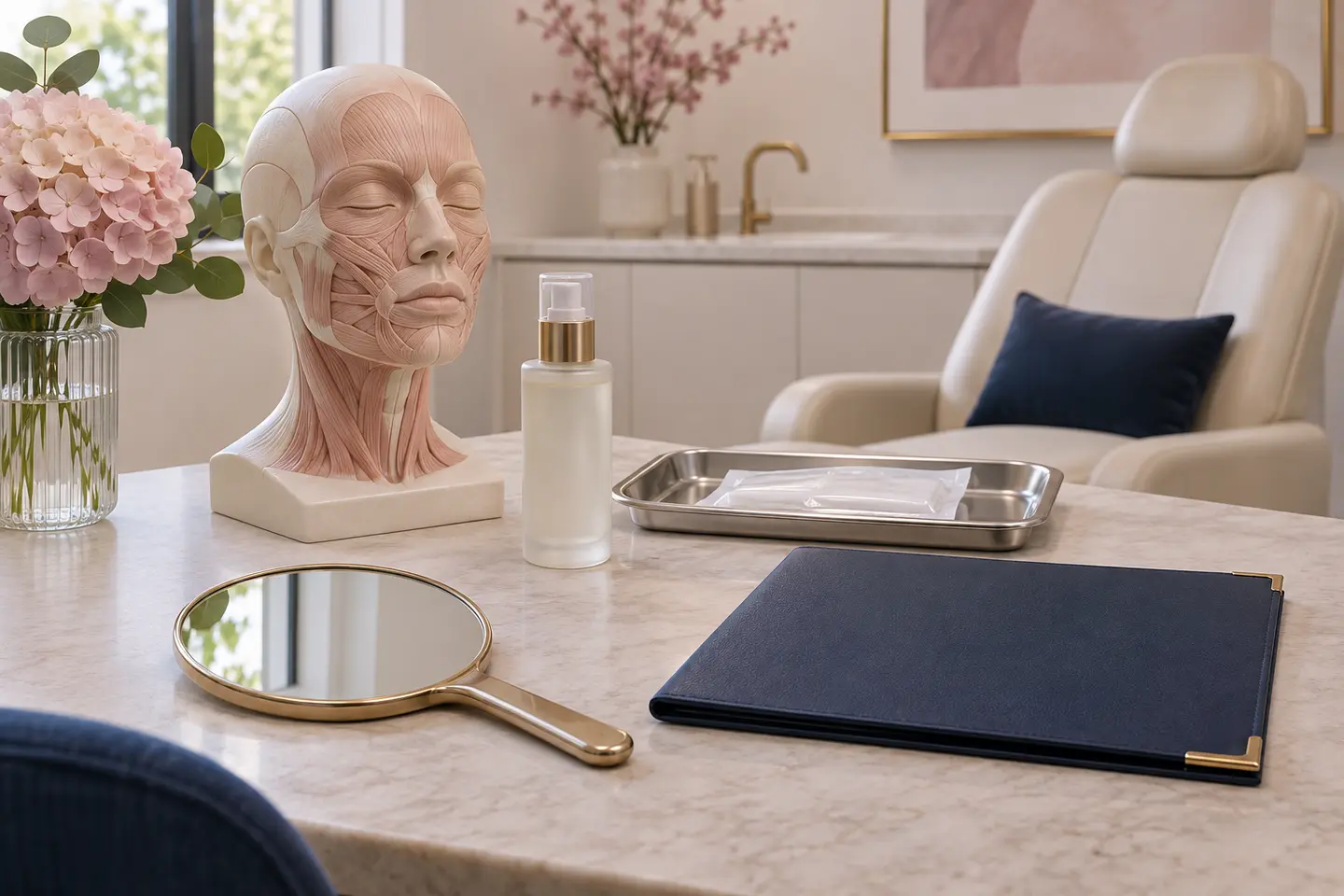
Illustrative artwork, not a patient photograph or promised result.
Contents
Understand the proposed product and purpose
Ask what product is proposed, why it suits the specific area and how long its effects may last. The result depends on anatomy, product and technique; another person’s photograph does not establish what is appropriate for you.
Not all fillers are the same or equally reversible. Even when a product can sometimes be dissolved, correction is another clinical intervention with risks and limitations. Do not treat reversibility as a guarantee.
Discuss complications before treatment
Bruising, swelling and unevenness may occur, but infection, tissue injury and rare serious vascular complications are also possible. Ask how the practitioner recognises and manages them and how you obtain immediate help.
Tell the clinician about previous products and reactions, health conditions and other planned treatment. Never buy injectable products to administer yourself or ask an untrained person to inject them.
When to seek professional help
Frequently asked questions
Are lip fillers and every other filler identical?
No. Products, properties and appropriate treatment areas differ. Ask about the exact product and rationale for your proposed treatment.
Can filler always be dissolved?
No. Reversibility depends on the product and circumstances. Even a dissolving treatment is not risk-free or a promise to restore the previous appearance.
Is filler risk-free because a substance occurs naturally in the body?
No. Product characteristics, injection technique and anatomy still create risks. Natural is not a substitute for safety evidence.
Will it look exactly like the consultation photograph?
No. Photographs can support discussion, but anatomy, healing and technique vary. Ask what is realistic for your face.
Can I have more immediately if I do not see a difference?
Do not judge or add treatment without the practitioner’s assessment and review plan. Early swelling can make results difficult to interpret.
What symptoms should not be ignored?
Severe or increasing pain, pale or mottled skin needs immediate clinical assessment. Sudden visual changes are an emergency: call 999 and tell responders about the procedure.
Can a parent consent to cosmetic filler for a 17-year-old in England?
No. Parental consent does not override the prohibition on cosmetic filler injections for under-18s. Limited medically directed exceptions are different from elective cosmetic treatment.
Can Odenta recommend the best filler brand?
No. Product selection requires an individual clinical assessment. Odenta can help you request a consultation, not choose or prescribe an injectable.
How Odenta can help
Odenta helps you request a consultation from participating practices. The receiving practice confirms availability, clinician suitability, referral requirements and fees. Odenta does not diagnose, prescribe or provide treatment.
Explore facial aestheticsOfficial sources
These links open professional guidance and patient information. Any manufacturer material is labelled and explains its own system; it is not independent evidence of superiority.
Content updated 8 November 2026 · General patient information from the sources above.
References used for this guide are listed above.
Was this page helpful?
Your response is saved on this device for now.