Facial aesthetics guide
3 min readFacial aesthetics consultation and suitability
What to discuss before a cosmetic procedure, including health history, expectations, alternatives and choosing no treatment.
A consultation should establish your concerns, medical history and expectations before any treatment decision. Being interested in a procedure does not mean it is suitable or necessary.
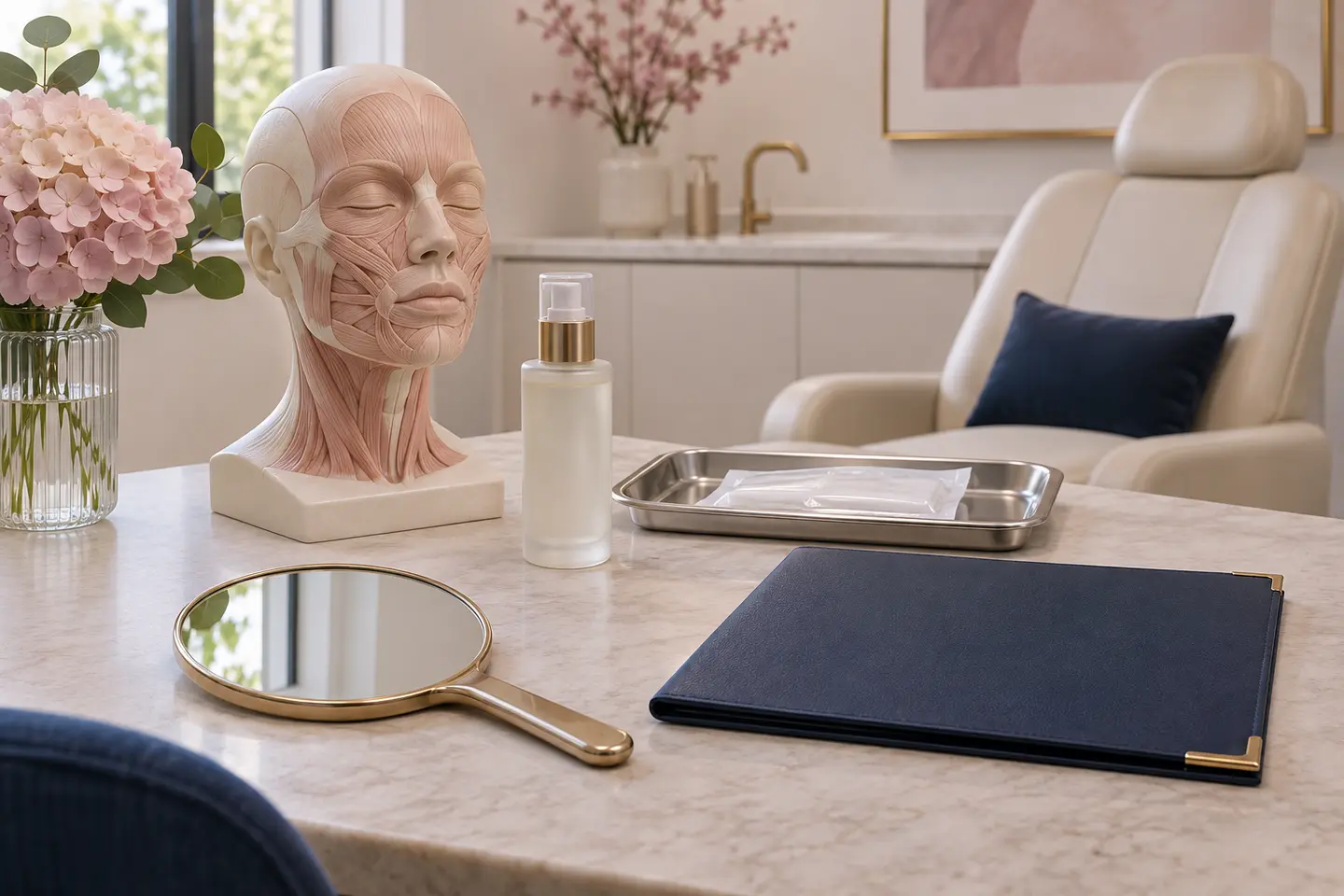
Illustrative artwork, not a patient photograph or promised result.
Contents
Bring the information that affects your decision
Explain what you hope to change and why. Discuss previous procedures, products if known, medicines, allergies, pregnancy or breastfeeding and relevant health conditions. Tell the practitioner about recent dental or medical treatment and any planned procedures.
A responsible practitioner may advise against treatment, suggest another assessment or recommend waiting. If a concern involves a changing skin lesion, unexplained swelling or another possible health problem, seek medical assessment rather than treating it as cosmetic.
Leave with answers, not pressure
Ask what each option can realistically achieve, the main risks, recovery needs and how complications would be managed. Include doing nothing among the alternatives. Take written information away and allow time to reflect.
If appearance concerns are causing significant distress or driving repeated procedures without relief, discuss this openly with a healthcare professional. A cosmetic procedure cannot guarantee confidence or resolve every concern about appearance.
When to seek professional help
Frequently asked questions
Can I book only a consultation?
Ask the practice about consultation-only appointments and any fee. Attending a consultation does not oblige you to undergo a procedure.
Do I need to know which treatment I want?
No. Describe your concern and let the assessment establish whether any option is appropriate. Do not feel obliged to choose from a marketing menu first.
Can I have treatment while pregnant or breastfeeding?
Tell the practitioner and seek individual advice. Elective cosmetic treatment may be deferred where safety is uncertain; do not assume a product is safe because it is described as natural.
Should I mention old filler even if it was years ago?
Yes. Provide the product, area and dates if known, and explain any previous reactions. Unknown details should be discussed rather than guessed.
Can I bring someone with me?
Ask the practice. A trusted person can help you remember information, but the decision should remain yours and free from pressure.
Can the practitioner say no?
Yes. They should decline or defer care when it is unsuitable, unsafe or unlikely to meet reasonable expectations.
Are these guides intended for children?
No. This collection is for adults. In England, cosmetic filler injections for under-18s are prohibited, subject to limited medical exceptions; parental permission does not make cosmetic treatment lawful.
What does Odenta provide?
Odenta offers a consultation request route to participating practices. It does not assess suitability, prescribe products or provide treatment.
How Odenta can help
Odenta helps you request a consultation from participating practices. The receiving practice confirms availability, clinician suitability, referral requirements and fees. Odenta does not diagnose, prescribe or provide treatment.
Explore facial aestheticsOfficial sources
These links open professional guidance and patient information. Any manufacturer material is labelled and explains its own system; it is not independent evidence of superiority.
Content updated 8 November 2026 · General patient information from the sources above.
References used for this guide are listed above.
Was this page helpful?
Your response is saved on this device for now.