OdentΛ

Local dental access

Dental care in Paisley

Paisley patients use the Greater Glasgow and Clyde public dental arrangements. A journey into Glasgow for urgent or referred care is different from finding a regular practice in Paisley. Begin with your registration status and the purpose of the visit. If anxiety makes attendance difficult, explain this when arranging care and ask what preparation or support the actual service can offer, rather than choosing a hospital solely because its name sounds more suitable.

Urgent dental safety

When to seek help now

Seek urgent dental assessment for severe or persistent pain, increasing swelling, a knocked-out adult tooth or bleeding after an extraction. Call 999 or go to A&E for serious facial injury, heavy bleeding that will not stop, or severe mouth or neck swelling affecting breathing or swallowing. Do not wait for an Odenta response.

Start with your registered practice. If you are not registered and need urgent care during the day, follow the local health-board route listed by NHS inform. For out-of-hours dental emergencies, contact NHS 24 on 111. Some emergency centres require an appointment after telephone assessment; check before travelling.

Emergency symptoms and what to do

Local patient planning

Choosing dental care in Paisley

NHS Greater Glasgow and Clyde's dental guidance directs unregistered patients needing emergency treatment to NHS 24 on 111. Registered patients should start with their own practice and its cover arrangements. Glasgow Dental Hospital explains that its emergency centre requires an appointment; being able to travel there from Paisley does not establish permission to attend without one.

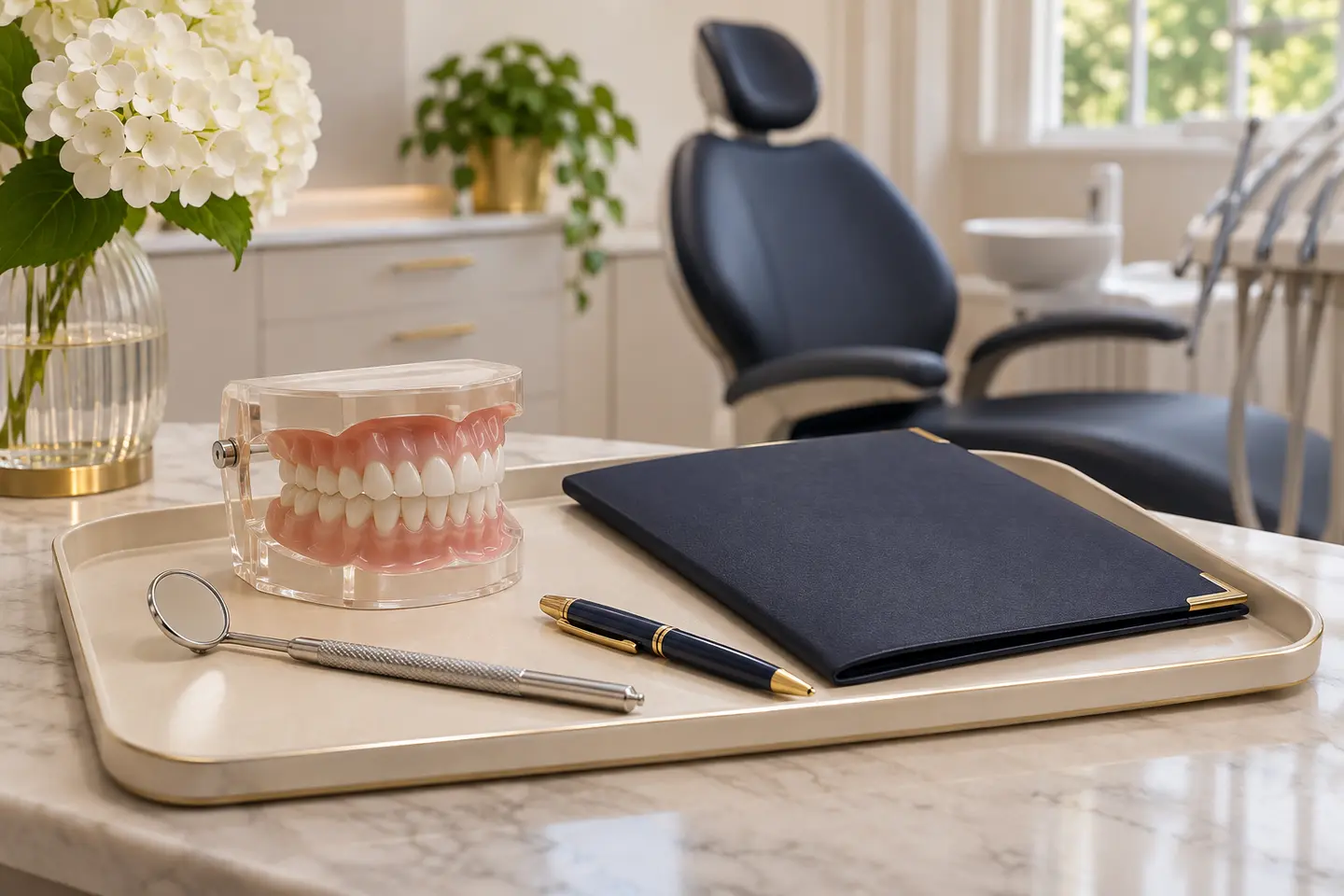
Dental model, mirror and patient information folder in a modern dental surgery

Plan the full course of care

For a Paisley resident considering care in Glasgow, compare the complete return journey and likely repeat attendance. Ask whether the proposed visit is an emergency assessment, a referral consultation or the start of continuing care. If you are already receiving treatment locally, arrange how records will be shared. Discuss your main concerns before the visit, including communication or physical access, and ask who will provide maintenance once an urgent or specialist episode has finished.

Routine care in Scotland

For ongoing NHS care, use NHS inform's dental service information and ask practices about registration. An emergency assessment is not the same as joining a practice for routine care. Odenta's expression of NHS interest is independent of NHS Scotland registration and cannot reserve an NHS place.

Understand dental access in Scotland

Official local access information

Local access sources checked . These independent public services are separate from DAN participation. Follow their current instructions.

Understand your treatment options

Read about assessment, benefits, limitations and aftercare before choosing a pathway. These educational guides describe treatments; they do not confirm that a local practice provides them.

For dental practices

Does your practice serve Paisley?

Apply through DAN, complete onboarding and control your public profile, services and patient requests. Your practice decides whether it can offer an appointment.

Apply to join DAN